Introduction
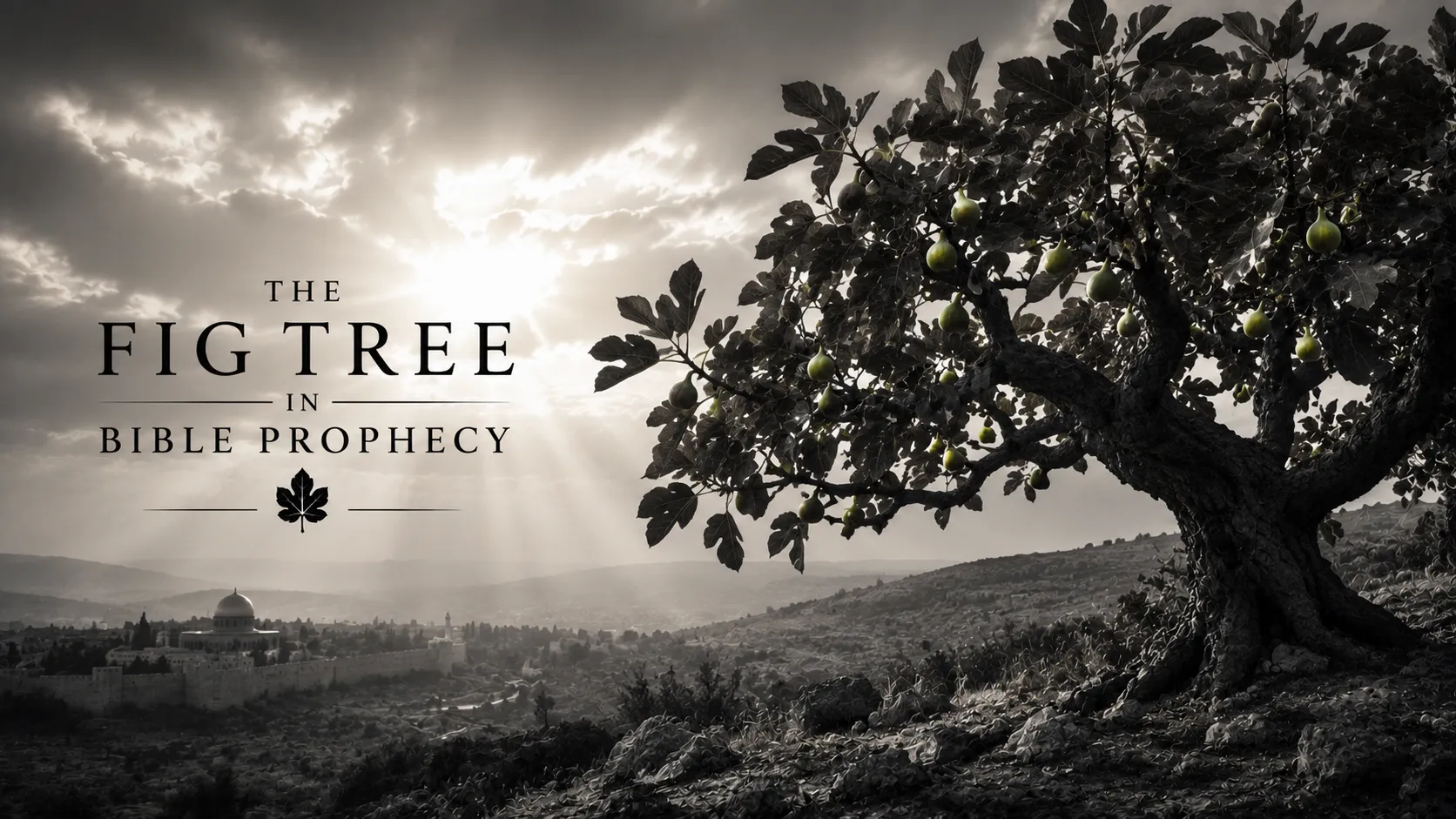
The fig tree is one of the most common plants that is mentioned in the Bible.
It is found in narratives, parables, prophetic messages and blessings throughout Scripture, from the Garden of Eden to Jesus' ministry.
Since Jesus used a fig tree in His lessons about the end times, many ask:
Are the figs Israel, and is the tree God?
Is the fig tree a symbol for the last days?
Has Israel come back in 1948, in line with Bible prophecy?
What was Jesus referring to when He said "learn a parable of the fig tree"?
These are questions worthy of interest.
The fig tree is clearly a symbol in the Bible on several occasions. But Christians have come to varying interpretations of some prophetic passages.
This article looks at what Scripture clearly says, and what it does not, but also what other interpretations might be held by faithful Christians.
The Fig Tree Throughout the Bible
In ancient Israel fig trees were prevalent.
They gave them food, shade and prosperity.
Due to their significance in life, they frequently were used as a symbol of spiritual realities.
Throughout Scripture, the fig tree can represent:
* God's blessing
* Peace and prosperity
These are merely a few of the various ways the word Israel appears in the Bible.
* Spiritual fruitfulness
* Judgment
* Hope and restoration
The significance is dependent on the context.
The Fig Tree is a symbol of peace.
In the times of peace, people were said to be sitting under their vine and under their fig tree.
For example:
But they shall sit every man under his vine and under his fig tree; and none shall make them afraid. (Micah 4:4, KJV)
The fig tree in this instance represents security, blessing, and provision from God.
The Fig Tree as a Picture of Israel
The metaphor of the fig tree is used by a number of Old Testament prophets to describe Israel or its fruit.
For example:
This is the first of two passages in the book of Hosea about Israel's fathers, which focuses on Israel's beginnings in the wilderness.These are two verses in the book of Hosea that about Israel's fathers, and that emphasize Israel's beginnings as a bunch of grapes in the wilderness (Hosea 9:10):
Jeremiah employs the images of good and bad baskets of figs also as symbols of the people of Judah (Jeremiah 24).
The fig tree can represent Israel in some prophetic settings as demonstrated in these passages.
But all the time reference to a fig tree does not necessarily imply Israel.
Every passage is to be read in its own context.
Jesus and the Fig Tree (Mark 11:12-14)
A particularly striking reference to the fig tree comes in the last week before the crucifixion.
Jesus found a tree full of leaves but without fruit.
He cursed the tree and it shrivelled.
This miracle didn't have to do with farming.
It was a sign of things to come, a warning against spiritual hypocrisy.
The tree was in good condition but with no fruit.
It is believed by many scholars to represent outward religion with no real faith, especially when associated with conditions of the spiritual leaders of Israel and the cleansing of the Temple.
Its main message is not a timetable for prophecy in the future, but a message about spiritual fruitfulness.
The Parable of the Fig Tree
Jesus later said:
Now learn a parable of the fig tree: When his branch is yet tender, and putteth forth leaves, ye know that summer is nigh. (Matthew 24:32)
He continued:
“So also will ye, when ye see these things, know that it is near, even at the doors. (Matthew 24:33)
What did He mean?
Jesus used a natural process to illustrate: fig tree.
When new leaves emerged this meant that summer was coming, and when the signs He described were fulfilled, then the time of His coming was near.
The focus is on identifying the season, not on forecasting a specific day.
Is the fig tree in Matthew 24 a reference to Israel?
This is one of the most controversial issues of Bible prophecy.
The Fig Tree is a symbol for Israel
Fig tree symbolized Israel in the Old Testament, so Jesus intentionally used it to make it another symbol of Israel.
Others relate the new budding fig tree to the recent restoration of Israel in 1948.
This is one of the prophetic milestones in the national restoration of Israel according to this perspective.
From this perspective, the Fig Tree is merely a parable
Other interpreters see that Jesus is teaching a lesson of nature.
Budding trees signal the summer, and so do the signs Jesus gave to tell us about what he told us would happen.
Jesus said in Luke:
“Look at the fig tree, and all the trees.” (Luke 21:29)
Some scholars believe that Jesus, in this instance, was offering a general illustration from nature, and that some of the trees were not necessarily symbolic but simply trees, in general, in God's kingdom.
What can be confidently said?
It is obvious from Scripture that:
In some Old Testament passages the fig tree represents Israel.
Jesus taught about spiritual fruitfulness in a fig tree.
The young fig tree was a parable of Jesus for the recognition of events in His coming.
Matthew 24 is a passage that has lead some faithful Christians to a variety of conclusions about whether the fig tree is the modern Israel.
The Fig Tree and the Last Days
Jesus was not saying that he was trying to make people guess!
Rather, He exhorted His disciples to be spiritually vigil.
He told about what was going to happen and said many times:
* Watchfulness.
* Readiness.
* Faithfulness.
* Endurance.
Believers are not to count the days, but wait expectantly for the coming of Christ.
The spiritual lessons on the Fig Tree.
1. God Desires Fruitfulness
In the Bible, fruit is a symbol of a life that embodies God's nature.
Faith should bring forth obedience, love, mercy and righteousness.
2. Facing the facts is not the same thing as actually seeing them.
The fig tree had no fruit, but it appeared to be alive when viewed from a distance.
God sees past the outside to the inside.
3.God’s Promises are faithful…
In the historical context of Israel, or the promises He made to His people, the Bible always shows a God that is faithful to His covenant.
4. Stay Spiritually Awake
Jesus' teaching reminds believers that God works and that they are to be ready for His return.
5. Trust God, and Hope Belongs to Those Who Trust God.
The end of all Bible prophecy is primarily hope.
The coming of Christ suggests the redemptive aspect of God's plan for the restoration of creation to His kingdom.
Common Misunderstandings
In the Bible, every fig tree is a symbol of Israel.
No.
The fig tree is used symbolically for peace, prosperity, fruitfulness, judgment, and in a few cases, as a symbol for Israel.
It has a different meaning in each passage.
Jesus foretold the year of His coming in the fig tree.
Jesus made it very clear that no one knows the exact day or hour of His coming (Matthew 24:36).
The parable is not a date-setter, the purpose is in PREPARENESS.
The fig tree prophecy will be given one explanation:
There are different interpretations of this passage among faithful Christians who agree to the authority of scripture.
The central truths of the return of Christ, the call to watchfulness, and God's faithfulness remains unaffected by prophetic perspective.
Frequently Asked Questions
Is the fig-tree a spiritual picture of Israel?
Yes, it does in several places in the OT. But not all fig tree references do imply that.
Did the fig tree prophecy come to pass in Israel's rebirth in 1948?
There is a correlation, or so many Christians believe, and others read Jesus' parable as a universal lesson on the importance of understanding the time. There is no direct reference in the scriptures to the budding fig tree being a reference to the events of 1948.
What was the reason Jesus used a fig tree?
The fig tree was well known, and it had a good biblical reference value, so it was a good tool for illustrating biblical truths.
So what is the lesson for believers from the fig tree?
The fig tree is a reminder for those who believe to produce spiritual fruit, to be alert, to rest on God's promises and to live ready for the return of Christ.
Reflection
The fig tree is one of the most symbolic pictures in the Bible.
It reminds us of God's blessings, it calls us to the real fruitfulness, reminds us of empty religion and reminds us of the need to be spiritually alert.
In prophecy or everyday discipleship, it is the same message:
God wants a people and hearts that trust Him, lives that yield fruit, and believers who eagerly await the return of Jesus Christ.
Closing Prayer
Heavenly Father,
Thank You for the knowledge in Your Word. Teach me to be humble to learn the scriptures; teach me to bear fruit for Your honor; teach me to live this day in faith that You will come again. I watch, I wait, I believe, I hope in Your promises.
In Jesus' name, Amen.