
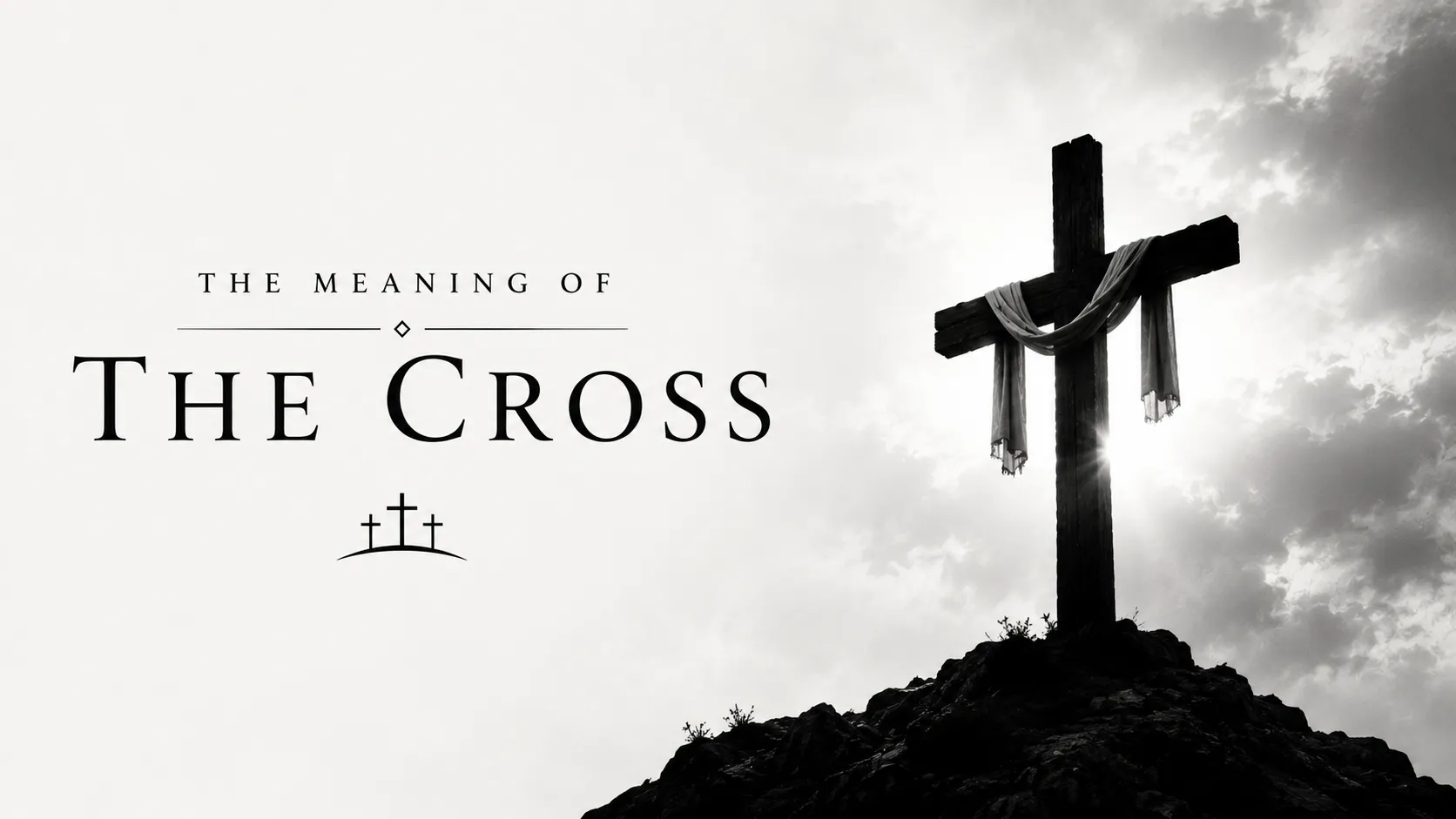
The Cross is the central symbol of Christianity, and this is why.
📖 Bible Verses (KJV)
However, God proves his love for us, for while we were yet sinners, Christ died for us.
— Romans 5:8 (KJV)
Additional Supporting Verses
For unto us who are saved it is the power of God: but unto them that perish it is the foolishness of God.
— 1 Corinthians 1:18 (KJV)
God sent his own Son as a sacrifice for our sins.
— 1 Peter 2:24 (KJV)
Just like Jesus, "the author and finisher of our faith... who endured the cross, despising the shame.
— Hebrews 12:2 (KJV)
📅 Approximate Year Written
* Romans: Around AD 57
* 1 Corinthians: Around AD 53–55
* 1 Peter: Around AD 62–64
* Hebrews: Around AD 60–70
The cross was a means of execution used by the Romans, but in the New Testament, it is a place where God brought the salvation of mankind through Jesus Christ.
Historical Background
One of the most cruel ways of execution in the Roman Empire was crucifixion.
It was meant for slaves, rebels, and serious criminals and was supposed to inflict extreme pain, public humiliation and prolonged suffering.
Around AD 30-33, Jesus was crucified outside Jerusalem at the place known as Golgotha or "the place of a skull", under the orders of the Roman governor, Pontius Pilate.
The cross was a symbol of shame and death to the people of that time.
Since Jesus' resurrection, however, it has come to be the symbol of God's love, forgiveness and victory.
What is the meaning of the Cross?
The cross is the focal point of God's plan of salvation in the New Testament.
1. The Cross is the symbol that reveals God's Love!
The cross is a symbol of God's love for man.
Jesus willingly gave His life so that sinners could be reconciled to God.
As Paul wrote:
But God has shown his love toward us in that Christ has died for us, while we were yet sinners.
— Romans 5:8 (KJV)
2. The Cross paid the price for sin!
The Bible says that everyone is a sinner (Romans 3:23).
Jesus, who had no sin, made His own self an offering for our sin.
His death completed the Old Testament sacrificial system which was necessary for the one-time expiation for sin.
3. The Cross Fulfilled Old Testament Prophecy
The prophets predicted the coming of the Messiah who would suffer centuries before Jesus was born.
Important prophecies include:
* Isaiah 53
* Psalm 22
* Zechariah 12:10
The New Testament shows us Jesus' crucifixion as the fulfillment of these scriptures.
4. It is the Cross that defeated sin, and death.
Christians know the story of Jesus' death is not the end of the story.
His resurrection was the evidence of his triumph over:
* Sin
* Death
* The grave
Together the cross and the empty tomb bears the message of hope for eternal life.
5. It is the Cross that calls the Believers to follow Christ.
Jesus taught:
Anyone who wishes to follow me must give up himself every day and carry his cross.
— Luke 9:23 (KJV)
To take up the cross is an expression used by Christians to describe living a life of faithful obedience, sacrifice and devotion to Christ.
🔬 Historical Evidence for the Crucifixion
The crucifixion of Jesus is an event that is well documented in the ancient world.
It is recorded by:
The New Testament
Jesus' crucifixion is recorded in detail in all four gospels.
Jewish Sources
Jesus' crucifixion under Pontius Pilate is mentioned in the first century Jewish historian Flavius Josephus.
Roman Sources
Tacitus, another Roman historian, mentions that Jesus was crucified under the rule of Emperor Tiberius, under the command of Pontius Pilate.
Archaeology
This is corroborated by archaeological evidence, such as the Pilate Stone and the remains of the first century crucified man, Yehohanan.
Archaeology cannot conclusively establish a theological meaning of the death of Jesus, but it has much to say about the historical context outlined in the Gospels.
Why do Christians have crosses on their body?
The cross was not immediately used as a public symbol by the early Christians since crucifixion was a shameful practice.
However, overtime it developed that the cross was the universal symbol of Christianity, since it symbolised:
* God's love.
* Christ's sacrifice.
* Forgiveness of sins.
Encouragement based on the resurrection.
* Victory over death.
The cross is not worshiped by the Christian, it is a symbol of the One who died upon it.
Real-World Example
Think of a court of law, in which a guilty person receives a just sentence.
But a totally innocent party steps forward and takes up that punishment in order that the guilty may go free.
Jesus' sacrificial death is described in like terms in the Bible.
The cross symbolizes the union of God's justice and God's mercy, in Christ.
Easy Explanation
The cross is a symbol that teaches Christians that Jesus died on the cross to save mankind from sin.
Wherever suffering and shame once went, now it is replaced by hope in a risen Jesus.
The Cross is not the wood, but the Sacrifice of Jesus Christ.
Did You Know?
The crucifixion was meant to be a painful and a public humiliation.
While the cross eventually became a familiar image, initially the early Christians were mainly concerned with the death and resurrection of Jesus.
The Good News of the Gospel of the cross was called by the Apostle Paul as "the power of God" (1 Corinthians 1:18).
The word “cross” is rendered as “stauros” in the Greek language, which means the Roman instrument of execution.
The cross is the symbol of Christianity that is most recognized worldwide today.
Historical and Biblical Consensus
Crucifixion of Jesus under Pontius Pilate is an agreed-upon fact by historians from diverse viewpoints.
There are various theological interpretations of His death, depending on the religion, but there is no doubt that the crucifixion is at the heart of God's plan for redemption for Christians.
Jesus' death is always described as a fulfillment of Scripture and as the way that God brings forgiveness and reconciliation.
Spiritual Reflection
The cross tells us that sin is serious, and that God's love is great.
It reminds believers that salvation is not something to be earned by their own works, but something which is made possible by Christ's sacrifice.
As Jesus declared:
No one has greater love than he who gave up his life for his friends.
— John 15:13 (KJV)
Each time Christians see the cross they are reminded that God's love was not just spoken, it was shown through the life, death and resurrection of Jesus Christ.
Key Takeaway
It is the cross that is at the very center of the Christian faith. It was once the symbol of Roman execution and disgrace, now it is the highest symbol of God's love, forgiveness, justice and victory through Jesus Christ. Although the story of Jesus' crucifixion is a historical reality, it remains a mystery that continues to inspire believers to this day and has been validated by biblical, Jewish, Roman, and archaeological evidence.
📚 References
Scripture
Holy Bible, King James Version (KJV)
Isaiah 53
Psalm 22
Matthew 27
Mark 15
Luke 23
John 19
Romans 3:23; 5:8
1 Corinthians 1:18
1 Peter 2:24
Hebrews 12:2
Historical Sources
Josephus, the Roman Historian (Flavius Josephus – Antiquities of the Jews)
Tacitus – Annals
The New Bible Dictionary
The Death of the Messiah.
The Cross of Christ
Archaeological Sources
Pilate Stone
Yehohanan
Israel Antiquities Authority
About This Article
In this article you will read about the meaning of the cross in the King James Version (KJV) of the Bible, from history and the Christian faith. It separates the historical events of Jesus' crucifixion from the theological implications of the death of Jesus for Christians.
Classification
Bible Text: Luke 15:11-32
Biblical References: Isaiah 53; Psalm 22; Matthew 27; Mark 15; Luke 23; John 19; Romans 5:8; 1 Corinthians 1:18; 1 Peter 2:24; Hebrews 12:2
Historical Status: strongly confirmed. The crucifixion of Jesus under Pontius Pilate is one of the most well attested facts of ancient history based on the New Testament, non-Christian historical sources, and even archaeology.
Archaeological Evidence: The archaeological evidence for the crucifixion practices of Romans is well attested by archaeological finds such as the Pilate Stone and the remains of the crucified man Yehohanan. These findings corroborate what is written in the Gospel accounts.
The understanding of Jesus' crucifixion was known by Christian theology, though there was general consensus among historians that Jesus was crucified. The cross is the central theme in the New Testament and is seen as the mechanism by which God was redeemed, forgiven and reconciled through Jesus Christ.
Editorial Note: This article has been written using the King James Version (KJV), historical evidence, archaeology and accepted biblical scholarship. Guiding Verses shows the difference between historical truths and the theological message of the gospel, and introduces the Christian understanding of the cross.