
Introduction
One of Jesus' miracles that stands out from all of the other miracles recorded in the gospels is unusual.
Jesus did not heal a man, calm a storm, feed the hungry -- he cursed a fig tree and it withered.
This seems like an unexpected action at first glance.
Why was Jesus so angry with a tree?
Did He just feel like he was hungry and didn't feel like eating?
Was the tree to blame for being unfruited?
If we take a look at the biblical context, we find that this miracle was not essentially about the tree.
It was a living parable—this was a prophetic sign that revealed the condition of God's people and an everlasting lesson of true faith.
The Biblical Account
The event is recorded in Matthew 21:18–22 and Mark 11:12–25.
Jesus was going with His disciples in the morning after He was welcomed into Jerusalem.
Matthew records:
It was early in the morning and he was hungry when he came back into the city.
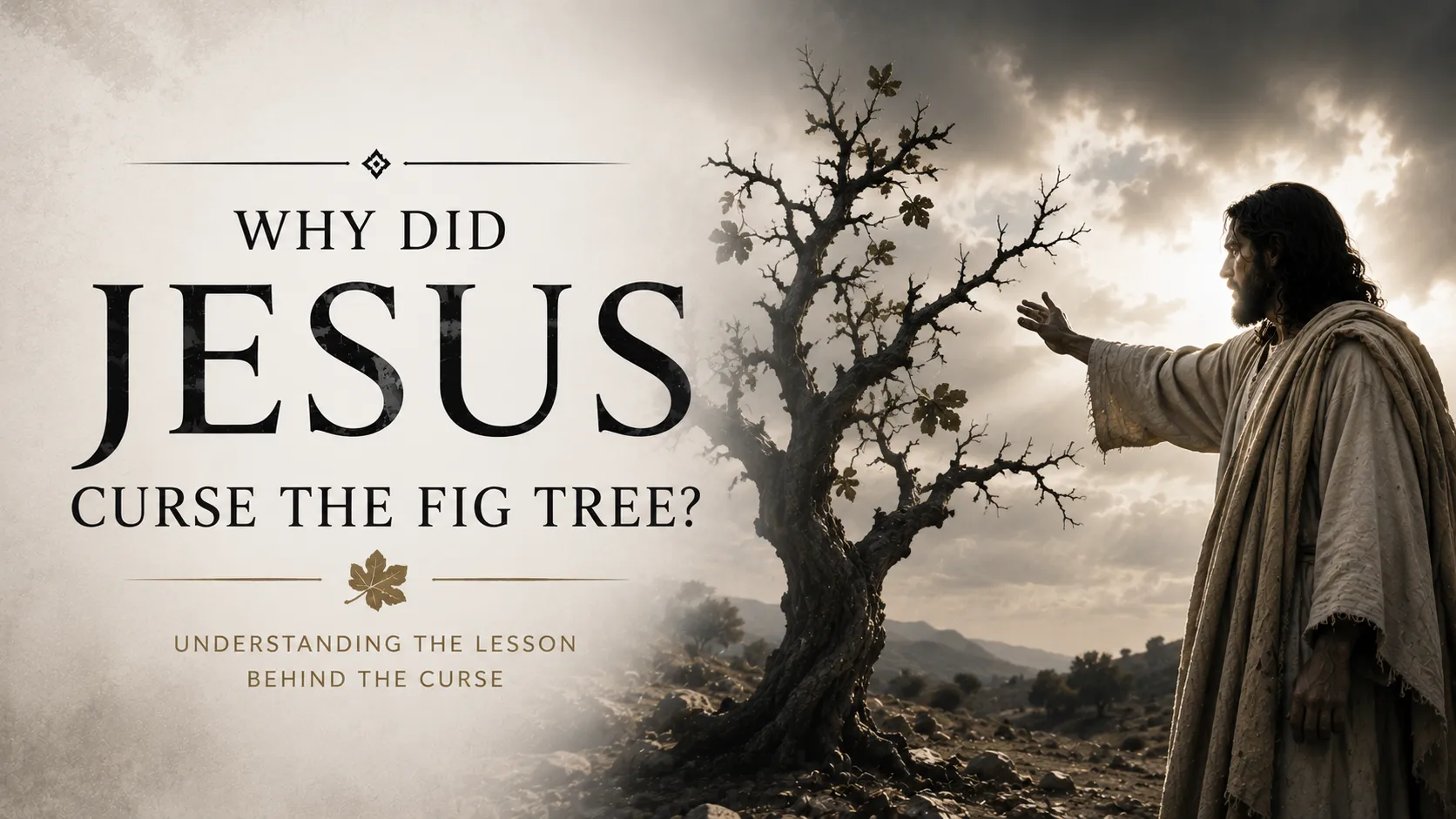
Then, seeing a fig tree, he came to it, and found nothing on it except leaves only and said to it, No fruit can grow on you ever again. Now at this time the fig tree began to wither. (Matthew 21:18–19, KJV)
Mark throws in a significant nuance:
The time for the figs was not yet. (Mark 11:13)
This declaration has prompted a lot of readers to ask a very simple question:
Why did Jesus ask for fruit, since it was not time for them?
The key is to understand the way that fig trees grow in the land of Israel.
The Fig Tree is the subject of this study.It is a study of the Fig Tree.
In first century Judea, small, edible buds were sometimes found on fig trees, prior to the full crop.
When a tree has green leaves, that usually meant that some fruit was ripening.
The tree was productive.
However, it captured the eye of an unwary observer.
It had leaves.
It was going to bear fruit.
But it brought out nothing.
It is here that the contrast between appearance and reality plays a very important role in the understanding of Jesus' action.
Why did Jesus curse the tree?
1. It Was a Living Parable
The miracle wasn't an emotional response.
It was the foretelling of an illustration.
In the Old Testament Israel is frequently metaphorically described as a vineyard or a fig tree.
God's intention for His people was that they would produce righteousness, justice, faithfulness and obedience.
Rather, many had an outward show of religion but were not truly devout.
The fruitless fig tree was a symbol of the spiritual emptiness.
2. It stood for religious hypocrisy.
The tree from afar seemed healthy.
Its leaves indicated life.
However, there were no fruits!
Jesus had just come into the temple and saw the religious activities taking place without them realizing what God was doing.
The temple was very busy.
A sacrifice was being made.
But many hearts were not with God.
The same occurred with the fig tree depicted.
A show of outward good form but no inner change is spiritual emptiness.
3. It Was Connected to the Cleansing of the Temple
Mark intentionally sets up the cursing of the fig tree in the context of Jesus' cleansing of the temple.
This literary device encourages the reader to consider both events in conjunction.
The fruitless tree represents the spiritual state of the temple leaders.
This cleansing of the temple is a proof of God's judgment on empty religion.
It's one strong lesson together.
4. It Was a Warning About Judgment
God's patience is very great throughout the pages of Scripture; however, when there is persistent failure to bear fruit, there are consequences.
Jesus had been calling Israel to repentance over and over.
Many believed.
There were also many who denied Him.
The dried up fig tree became a stark lesson that religious privilege was not a substitute for true faith and commitment.
What Fruit Was Jesus Looking For?
Spiritual fruit is frequently talked about in the Bible as something that's a sign of a life filled with God.
This includes:
* Faith
* Repentance
* Love
* Mercy
* Justice
* Obedience
* Humility
* Righteousness
God has never wanted our religion to be visible.
He wants hearts changed that will yield lives that are characterized by His likeness.
What Happened Next?
The disciples were amazed to see the tree die.
This was an opportunity for Jesus to teach the lesson of faith.
He said:
If you have faith and do not doubt…
He spoke of faith in God and asked His disciples to pray with faith.
The miracle was a warning to not be fruitful and it was an invitation to total faith in God.
Was Jesus Angry?
Some people think that Jesus was frustrated when He was hungry.
The context of the surrounding area implies otherwise.
The whole thing is orchestrated to fit the hand of the prophet.
Jesus was a master of parables and symbols.
As with the cleansing of the temple, the cursing of the fig tree was a declaration that God was concerned with a legitimate worship rather than just a formal worship.
Five Deep Lessons from the Fig Tree
1. God looks beyond what people see!
Outward success is the criteria that people often judged by.
God sees our heart.
Leaves can make an impression.
It is the fruit that is important to God.
2. Hezekiah said: "Religion Without Relationship Is Empty".
Attendance at worship and familiarity with scripture or engaging in religious activities does not necessarily lead to spiritual fruit.
God wants a heartfelt faith that has an impact on the way we live our lives every day.
3. Fruit Is the Evidence of Faith
Fruits are by-products of healthy trees.
Similarly, love, obedience, compassion, holiness are signs of true faith.
Fruit does NOT bring salvation.
It shows the truth of what happens when God intervenes in someone's life.
4. God's Patience is not Indifference
God is always patient with sinners, as we see in the Bible.
But also, it reminds us not to refuse His invitation to repentance continually.
The withered tree is a reminder to us to respond during God's invitation.
5. Faith Trusts God's Power
Jesus immediately started speaking to His disciples about believing prayer.
The lesson transitions from judgment to hope.
People who have faith in God can rely on His strength and faithfulness.
Common Misunderstandings
What can I say, Jesus was unfair, since it wasn't fig season.
The fact that it was not the major fig harvest season is significant, as Mark notes. That would be the time when a tree bearing fruit would have early edible fruit there. Not only was it a question of timing, but it was a tree that fooled you.
"Jesus lost His temper."
There is no indication of a lack of self-control in the text.
The event is a prophetic sign or sign of the times, just as Old Testament prophets acted symbolically.
The miracle illustrates that God does not want trees.
It's not about the tree.
It is a more profound spiritual truth relating to fruitfulness, hypocrisy, and God's desire to have real faith.
Frequently Asked Questions
Why did Jesus curse the fig tree because it was not bearing fruit?
The fig tree was a prophetic sign of spiritual barrenness and the threat of religious activity without spiritual commitment.
Why is the fig tree important in the Bible?
The fig is often a biblical type representing Israel and spiritual fruitfulness as in the Old Testament.
What is God's Fruit?
God wants a life of faith, love, repentance, obedience, mercy, justice and holiness.
Are there any Christians today who can claim this miracle?
Yes.
The miracle challenges all believers to look at their lives to see if they are bearing a spiritual harvest in their lives or just playing the religious game.
Reflection
The fig tree seemed to be fine.
Its leaves were the source of fruit.
However, there was emptiness behind the façade.
Jesus tells us that God isn't looking for the show, He's looking at the heart.
He is searching for lives changed by His grace—that is, lives that manifest the fruit of the Spirit: faith, love, humility, and obedience.
The miracle is not just a judgmental one.
It is an invitation to stay in Christ who is the true source of spiritual life, so our lives will produce good fruit for the glory of God.
Closing Prayer
Heavenly Father,
Search my heart and help me to produce fruit that is pleasing to You. Do not let me fall into empty religion, but teach me to live the life of true religion, of love, humility and obedience. Let the work of my life be a life-changing work of Your grace; let it glorify Your Name.
In Jesus' name, O' yes.