Why Words Matter: What the Bible Says About the Power of Our Words
The Bible has a lot to say about the power of our words.
Introduction
Words are everywhere.
We talk about them, write them, text them, post them and say them without giving them much thought.
Words of encouragement to the hopeless are few.
A few words can destroy someone's confidence.
A few words can heal a relationship – or tear it apart.
The Bible really meant what it says; words are a window into the heart.
Jesus said:
“For out of the abundance of the heart, the mouth speaketh.”
— Matthew 12:34, KJV
Not all words are without significance.
They can bring truth or falsehood, grace or bitterness, wisdom or folly.
And in today's digital landscape, what we say goes farther and lingers longer than ever.
Then why is it that words are so significant?
What we say, and what we share online, can have an impact on people's lives.
1.Words have the power to give life (or cause harm)
One of the best declarations of speech can be found in Proverbs:
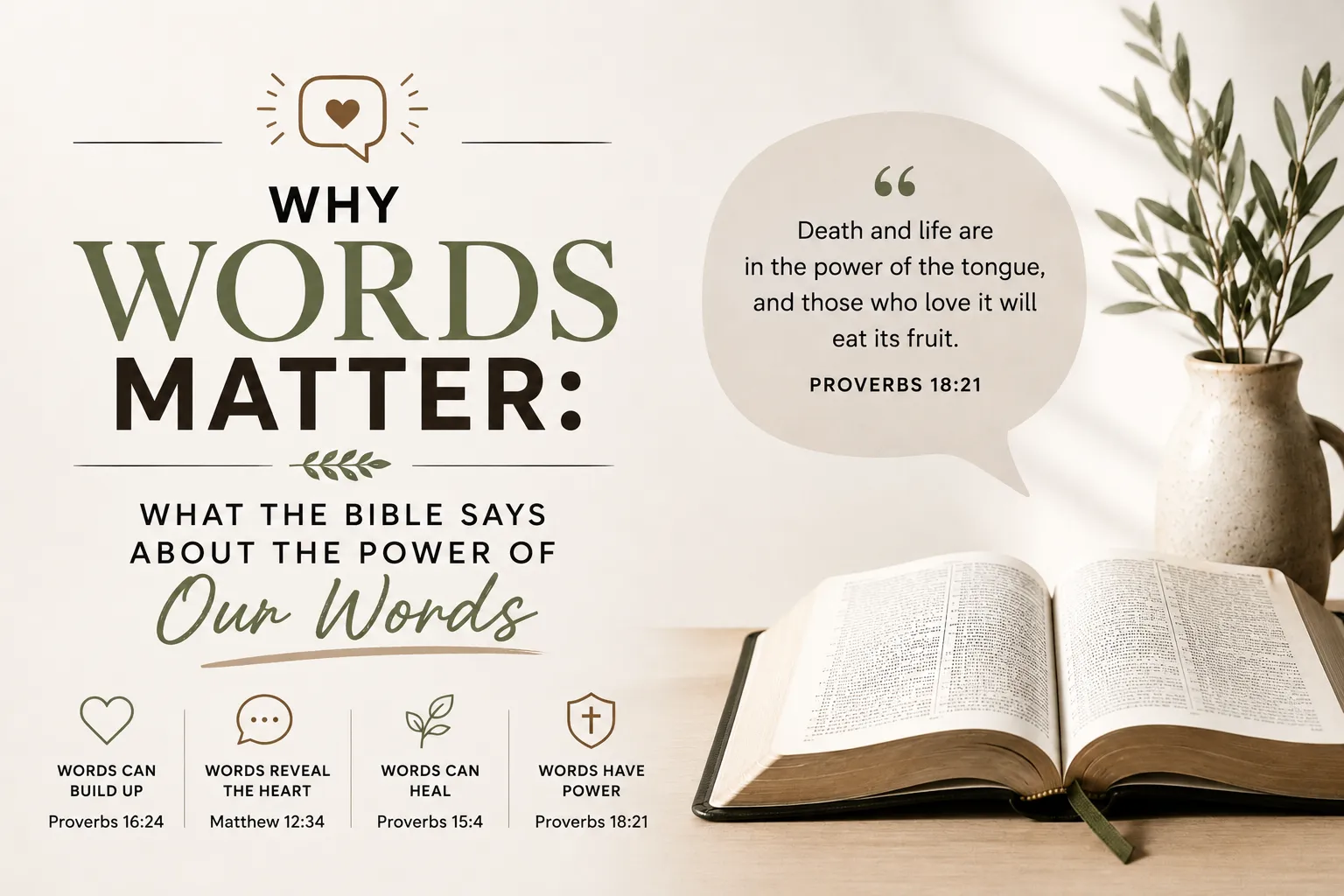
"Death and life are in the power of the tongue..."
— Proverbs 18:21, KJV
Solomon is a strong speaker of pictures.
In spite of our small tongue, it can have a big impact.
Consider how a single sentence can impact a person's day.
"I'm proud of you."
"I believe in you."
God didn't forget about you.
The words may sound easy, but they can provide someone with courage.
This is not true the other way around.
Anger can lead to lasting wounds that take years to heal.
This is why Jesus said in Scripture to make our words seem like something valuable instead of something disposable.
2. Words Reveal the Heart
Jesus said that what we say comes from what is in our hearts.
"Out of the abundance of the heart the mouth speaketh.
— Matthew 12:34, KJV
We reveal through our words:
What we value.
What we fear.
What we believe.
What offends, irritates, or upsets us.
What we desire.
What we are thinking about.
If our hearts are bitter, it's only a matter of time before we express it in our tongue.
If we fill our heart with gratitude, then gratitude will come out of our mouth.
It is not just a matter of learning new words in a better manner.
It starts with us letting God change our hearts.
3. Words Can Heal
In the book of Proverbs, you'll find a beautiful picture of encouraging words:
"A wholesome tongue is a tree of life..."
— Proverbs 15:4, KJV
Think about the possibility of imparting a little hope through a word.
A parent pushing their child.Parent pushing their child.
A friend comforting someone who is suffering from loss.
A man comforting his wife.
A pastor who is encouraging a faltering believer.
A gift from an unknown person.An unexpected, positive message from an unknown person.
Language can be used as a healing force.
We don't realize how much they need a kind word!
4. Words Can Destroy
One's tongue can do great damage as well as great encouragement.
The tongue is like a fire, says James:
But the tongue is a small member, and talketh great things. “How heigh the mountain is, great is the manner of his bringing up the fire!”
— James 3:5, KJV
Small fires can be the cause of large fires.
Likewise, a small comment can start a massive conflict.
A rumour can ruin a person's reputation.
An accusation is harmful to a relationship.
An angry message can cause years of resentment.
Wisdom calls for restraint, therefore.
5.Words can build people up
Paul offers a guideline for Christians:
Let no foul word come out of your mouth, but that which is good to the use of edifying.
— Ephesians 4:29, KJV
Edifying means to build up.
Suppose Christians would treat all their discussions as if they were always asked this question:
How can I "take up" this person with my words?
Rather than always searching for a fault we would search for opportunities to encourage.
If we are going to fault a person for something, we could remind them of their value.
We can share hope, instead of spreading negativity.
6. Words Should Be Filled With Grace
Paul also writes:
Make your speech always seasoned with salt, graciously seasoned.
— Colossians 4:6, KJV
Grace is about a different way of relating.
But it is not a form of denial.
It involves speaking truth in a wise, kind and respectful way.
It is possible to disagree with someone without embarrassing them.
It is possible to give correction without insulting.
It's possible to argue your point of view without taking on an assaultive tone.
Cruelty is not a need for truth to be effective.
7. Words Matter in Arguments
Our character is shown in arguments.
It's human nature to want to win someone's admiration when we're in disagreement.
But Proverbs says:
"A soft answer turneth away wrath: but grievous words stir up anger."
— Proverbs 15:1, KJV
A good reply can alter the course of a discussion.
This is not to say that we should never hold people responsible for their misdeeds.
Jesus Himself confronted hypocrisy.
In spite of being firm in our words, we must be wise and not angry.
8.Wisdom is not only in speaking, but also in remaining silent.
In some instances, the best words are the ones that are not uttered.
Ecclesiastes says:
"A time to keep silence, and a time to speak."
— Ecclesiastes 3:7, KJV
Not all the accusations require an answer!
Not all arguments require our involvement.
Not all opinions have to be displayed.
Not all thoughts have to be tweets!
Wisdom is aware of the distinction between saying and needing to say.
9. Words Matter on Social Media
Biblical principals of speech are applicable to the digital world.
Your:
Instagram captions
Facebook posts
YouTube comments
X posts
WhatsApp messages
Emails
Text messages
All communication is done via.Communication is by.
A screen doesn't diminish our words.
Actually, with online communication, people can't hear our tone of voice or see our facial expressions, so it is more important because more wisdom is needed.
When the intent of a sentence is taken as a joke, it can seem cruel.
If you want to convey sarcasm, you need to be careful that the reader understands it.
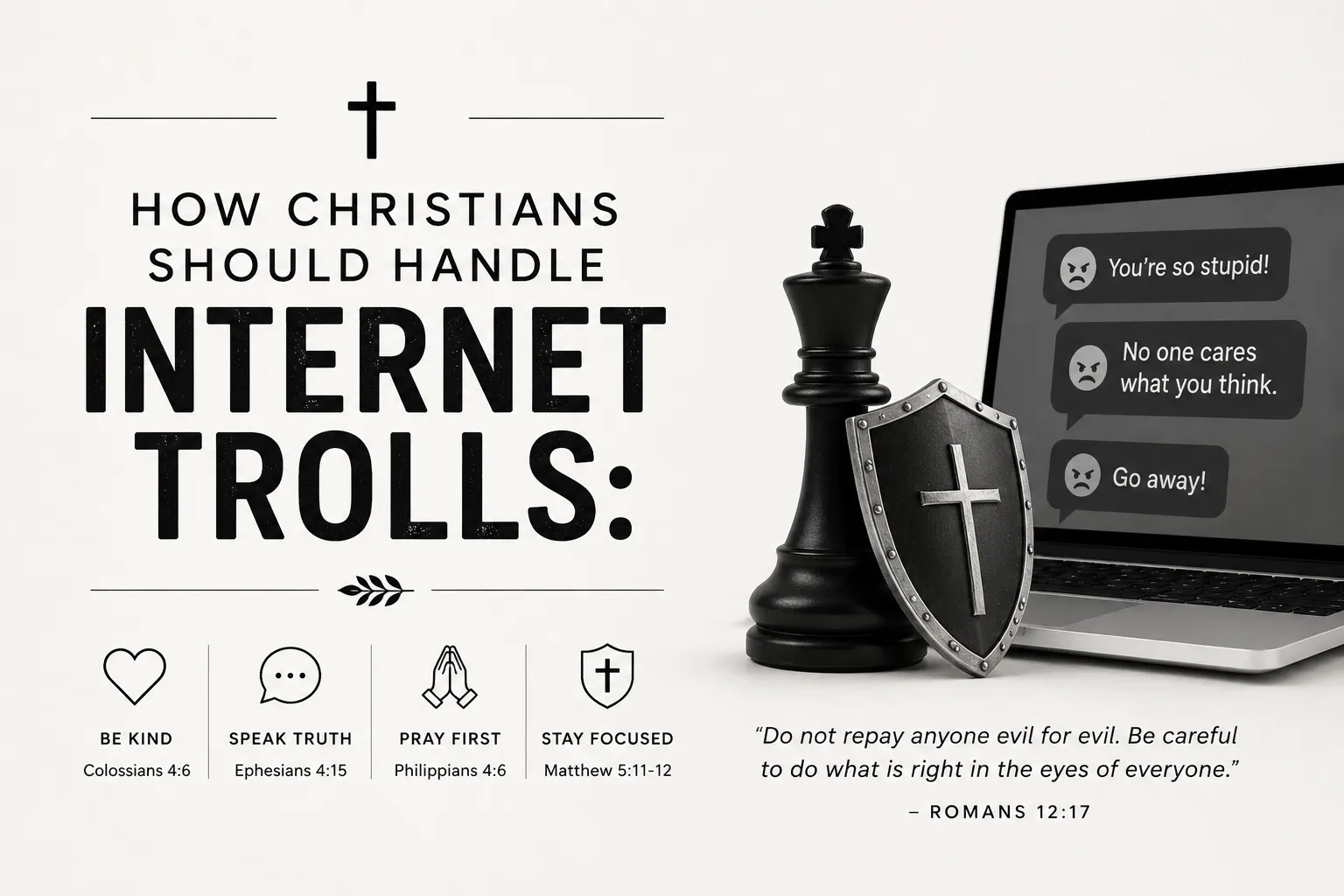
Stop and reflect before posting:
Is this true?
Is this loving?
Is this helpful?
Is this honoring of God?
10. Words Can Spread Gossip
Gossip is especially perilous, as it can hide in what appears to be a normal conversation.
You receive private information from someone.
You share with another person.
They share with another person.
Soon a private matter has become public knowledge.
Proverbs warns:
“A tale bearer revealeth secrets”
— Proverbs 11:13, KJV
With the click of a button, rumors can run around in the digital era now.
A screenshot.
A forwarded message.
A repost.
A comment.
Ask yourself if you have the right to share before sharing something about another person.
11. Falsehoods can be spread by words.
God is very concerned about truth.
The Ninth Commandment is:
You shall not falsely charge your neighbor with a crime.
— Exodus 20:16, KJV
It is particularly true in today's era of misinformation.
Before using a dramatic quote, story, accusation or headline, check it.
It's not so important that you're the first to share as it is that you're honest.
Christians ought to be trustworthy people.
12. Words Reveal Our Christian Witness
Jesus said:
By this shall all men know that ye are my disciples, if ye have love one to another.
— John 13:35, KJV
Communication is a piece of our witness.
There is a possibility that people may not read a Bible at all.
They might not go to church at all.
They could, however, come across a Christian in a comment section.
What will they see?
Anger?
Pride?
Mockery?
Or grace?
Words can't take the place of the Gospel, but they can build up or tear down the message that we say we believe!
13. Words Can Express Faith
Words are not the only weapons that are dangerous.
They are also avenues of faith.
We use words to:
Pray.
Worship.
Testify.
Teach.
Encourage.
Share Scripture.
Share the good news of Jesus with others.
That is, the gospel is conveyed with words.
What would happen if Christians would go out and use their online platforms to inspire those around them to have hope instead of adding to the noise?
14. Jesus is our example
Jesus is an example of perfect wisdom in His communication.
He was a good conversationalist.
He was able to keep his mouth shut.
He healed the broken.
He did battle against the arrogant.
He forgave sinners.
He taught truth.
He encouraged His disciples.
During his time on the cross Jesus prayed:
Forgive them, for they do not know what they do, Father.
— Luke 23:34, KJV
Out of his mouth came His heart.
To make our speech more Christlike, we must learn from Jesus' speech to people.
15. Think before you speak.
So how is our speech to be controlled? James tells us one of the simplest principles for controlling our speech:
Make haste to listen, slow to speak, slow to be angry.
— James 1:19, KJV
Notice the order.
Listen first.
Speak slowly.
Control anger.
This is the reverse of what social media has become today.
Instant reactions are rewarded on the internet.
The Bible teaches wisdom to cause thoughtful responses.
A simple "Before You Speak" test.
If you're about to say or post something, ask yourself:
Is it true?
Don't share unverified information.
Is it loving?
Be not cruel for the sake of truth.
Is it helpful?
Will these words be of help to someone?
Is it necessary?
Need we say anymore?
Is it wise?
Will these words cause any harm?
Does it bring glory to God?
Would you be willing to say these words to God?
But if it's no, maybe you should keep your mouth shut.
How to use words for good:
It doesn't require a big opportunity to come through.
Start small.
Encourage someone.
Say something nice to somebody.
Speak gratitude.
Gratefully accept what people do.
Comfort someone.
Reach out to those who are grieving and let them know they are not alone.
Apologize.
Don't allow pride to destroy relationships.
Forgive.
Don't repeat anyone's mistake and make it their weapon.
Share hope.
Encourage discouraged people to remember that God hasn't left them.
Speak about Christ.
Speak up and guide people to Jesus.
Frequently Asked Questions
Why is it that the Bible teaches that the tongue has power?
Because words make a difference. They have the potential to impact people's emotions, relationships, reputations, decisions, and even their spiritual lives.
Can words ever hurt?
Yes. Words can cause a wound that lasts a long time and is deep. Hence the repeated injunction of Scripture to speak wisely and lovingly to believers.
Can we say anything bad?Is it bad to say anything bad?
Not necessarily. Sometimes there needs to be strong correction. Even correction, however, should be conducted under the guidance and control of truth, wisdom, love, and self-control.
Is it the responsibility of Christians to reply to every argument found online?
No. Wisdom is knowing when to talk and when to listen. Not all arguments should be added.
What to do if my words hurt?
Take responsibility.
Apologize sincerely.
Ask for forgiveness.
Don't make excuses.
Then learn from the experience and allow God to change the way you communicate.
Reflection
Words are small.
However, their impact can be immense.
A sentence can make a person feel like they are valued.
People can feel like they are worthless when someone tells them in a sentence.
A sentence can give hope.
A sentence can break down the trust.
A sentence can be a pointer to Jesus.
A sentence can be a push away.
Which is why the Bible puts such emphasis on our words.
Take time before you speak.
Stop and think before you post.
When you feel like responding angrily, pray first.
Before you say a critical thing, keep in mind that your words have meaning.
You are anointed and given a voice.
Use it wisely.
Use to encourage.
Speak truth with it.
Bring it to bring peace.
Share hope with it.
Most importantly, use it for the glory of God!
May the words of my mouth and the thought of my heart be pleasing to you, O LORD.
— Psalm 19:14, KJV
Closing Prayer
Heavenly Father,
Thank You for giving me the ability to communicate with others. Forgive me for the times I have used my words carelessly, spoken in anger, spread information I should not have shared, or hurt someone through what I said.
Give me wisdom to know when to speak and when to remain silent. Fill my heart with Your truth so that my words reflect what You are doing within me.
Help me use my voice to encourage the discouraged, comfort the hurting, speak truth with love, forgive others, and point people toward Jesus.
May the words of my mouth bring life rather than destruction and reflect Your character wherever I go.
In Jesus' name, Amen.