
Biblical Principles of Rest and Health
Biblical Principles of Rest and Health: What Does the Bible Teach about Caring for Body, Mind, and Soul?
Bible Verses (KJV)
On the seventh day, God finished his work, the work he had created; and on the seventh day he rested from all his work, which he had created.
— Genesis 2:2 (KJV)
Additional Supporting Verses
Keep the sabbath day holy: "Remember the sabbath day, to keep it holy.
— Exodus 20:8 (KJV)
Come ye yourselves apart into a desert place, and rest awhile..."
— Mark 6:31 (KJV)
Dare you to say you don't know that the body you have is the temple of the Holy Ghost… therefore glorify God in your body, and in your spirit, which are God's.
— 1 Corinthians 6:19–20 (KJV)
📅 Approximate Year Written
* Genesis: Around 1445–1400 BC
* Exodus: Around 1445–1400 BC
* Mark: Around AD 55–65
* 1 Corinthians: Around AD 53–55
Rest and good stewardship of the body are significant components of faithful living that are introduced in the very first chapters of Genesis and continued through the teachings of Jesus and the apostles. Scripture is not a medical textbook but it does contain timeless principles that support physical, emotional and spiritual well-being.
Historical Background
The life in biblical days was physically strenuous.
The majority of people were employed in:
* Farmers
* Shepherds
* Fishermen
* Craftsmen
Workdays could be as long as from morning to evening.
In this context, God set up rhythms of:
* Work.
* Rest.
* Worship.
* Community.
* Celebration.
The Sabbath was a special institution designed to set Israel apart from the surrounding nations, providing time off for all members of the family, servants, foreigners and even the animals!
What does the Bible say about rest?
1. Rest is a Part of God's Design
The first mention of rest in the Bible is in the context of creation.
God rested on the seventh day—because His work was finished—not because He was tired.
This set an example for humankind.
Rest is described as being a part of God's plan of good design in life.
2. The Sabbath was a time of renewal, both physical and spiritual.
The 4th Commandment was for Israel:
Remember the sabbath day, to keep it holy.
— Exodus 20:8 (KJV)
The Sabbath provided:
* Physical rest.
* Time for worship.
* Family fellowship.
Memory of God's goodness.
It brought Israel to understand that they were identified not by their work, but by God.
3. Jesus Valued Rest
Jesus knew the value of getting away from the busyness even during the time of His busy ministry.
He said to His disciples:
Let us go apart, and rest a while in a wilderness place.
— Mark 6:31 (KJV)
Jesus frequently went to secluded places to pray and refresh himself.
Biblical Principles for Health
The Bible may not refer to modern medicine, but it does give us guidelines to help live a healthy lifestyle.
Caring for the Body
Paul wrote:
"Your body is the house of God.
— 1 Corinthians 6:19 (KJV)
Christians are to honor God in the responsible care of their body.
Moderation
The Bible speaks many times of abundance, and excess.
In all areas of life - food, drink, money, enjoyment - Scripture extols self-control as a fruit of wisdom and godliness.
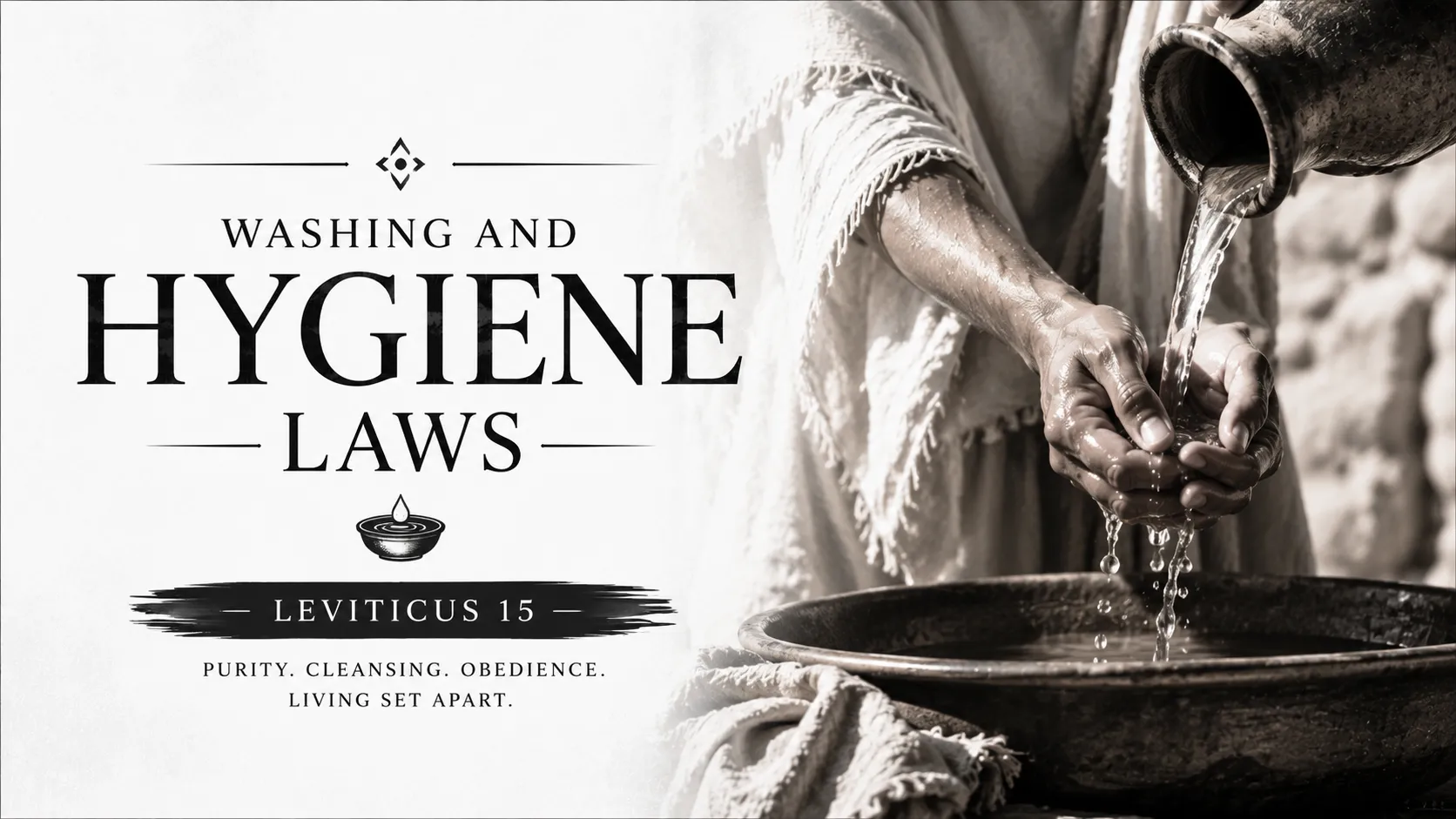
Cleanliness
In the Mosaic Law, there are lots of directions given regarding:
* Washing.
* Sanitation.
* Food preparation.
Isolation is the separation of people who are sick and have certain diseases.
The laws were generally for ceremonial purposes but also reflected practices which often were related to public health.
Peace and Emotional Health
Proverbs teaches:
A merry heart is a medicine, "A merry heart doeth good like a medicine.
— Proverbs 17:22 (KJV)
The Bible acknowledges the link between emotional health and general health.
Life giving virtues of trust in God, gratitude and forgiveness and peace are offered.
What Does Modern Science Say?
Many of the benefits of good rhythms that are mentioned in Scripture have been substantiated by modern medical research.
Research indicates that good sleep can help:
Enhance memory and concentration.
* Support immune function.
* Promote emotional well-being.
* Reduce stress.
* Aid physical recovery.
Similarly, healthy lifestyle behaviors—like moderation, cleanliness, positive relationships, and breaks—are linked to better health outcomes.
Of course, these are the modern findings in medical science. While the Bible offers principles of wise living, it does not say that it offers scientific explanations for these health effects.
Is it biblical to believe in medical healing?
No.
There were many believers in Scripture who suffered from sickness and pain such as:
* Job.
* Timothy (1 Timothy 5:23).
Paul mentions a "thorn in the flesh" (2 Corinthians 12:7-9).
Epaphroditus, who fell ill and was not feeling well (Philippians 2:25-30).
Faithful believers can become sick, according to the Bible.
Rest, good living, prayer, and medical treatment are not considered to be protection from disease.
Real-World Example
Let's say a farmer who doesn't stop working every day.
As a result, the levels of productivity fall and health is adversely affected as a result of exhaustion.
Now suppose there's another farmer working hard, but also finding time for rest, family, worship and renewal.
The second pattern captures the rhythm of God laid out in Scripture.
Instead of laziness, rest is a part of wise stewardship.
Easy Explanation
The Bible gives us the principle that we need to have rest our position, but we must also have rest in our actions.
God made man with boundaries.
Healthy living includes:
* Working diligently.
* Resting appropriately.
Care of the body.
* Trusting God.
* Living with self-control.
These principles can foster a person's physical, emotional and spiritual well-being.
Did You Know?
Servants and animals were bound by the same command as humans: don't break the Sabbath (Exodus 20:10).
Additionally, Israel took Sabbath years where the land would lie fallow every 7 years (Lev 25:1-7).
Jesus would go off alone to pray before starting out in His work.
There are many practical lessons on self-control, wisdom, and healthy living in Proverbs.
Healthcare is becoming more aware of the role of sleep and stress management, as well as emotional well being, for general health care.
Historical and Biblical consensus:
The teaching of the word of God was the principle use of the Sabbath, as biblical scholars agree that it was used to glorify God, to remind Israel of creation, and to remind Israel of redemption.
Many others are also aware of its real world advantages in physical and social health.
Similarly Scripture continually calls for balance, proper use of the body and cycles of work and rest.
The Bible is not a health manual, but its teachings have had an impact on attitudes toward health, work, and human dignity throughout history.
Spiritual Reflection
True rest is more than a stoppage of work.
There is a deeper rest in trusting in God that is revealed in the Bible.
Jesus called those who were weary:
Take my yoke upon you and learn from my teaching.My yoke is easy for you to bear and my burden is light.
— Matthew 11:28 (KJV)
Physical rest rejuvenates the body.
Spiritual rest rejuvenates the soul.
They both remind believers that life is not only by human effort but God's grace as well.
📌 Key Takeaway
Work and rest are gifts of God, the Bible says. Between Sabbath and Jesus' words "rest a while," scripture invites us to embrace good rhythm in our work, worship, and refreshment. The Bible does not guarantee health and healing but does encourage the principles of moderation, cleanliness, responsible care of the body, emotional peace, and trust in God – principles that are still valid today and are conducive to human health.
📚 References
Scripture
Holy Bible, King James Version (KJV)
Genesis 2:1–3
Exodus 20:8–11
Leviticus 25:1–7
Proverbs 17:22
Matthew 11:28–30
Mark 6:31
1 Corinthians 6:19–20
Philippians 2:25–30
1 Timothy 5:23
2 Corinthians 12:7–9
Historical Sources
The New Bible Dictionary
The Baker Encyclopedia of the Bible.
A Biblical Dictionary of Imagery.A Biblical Dictionary of Imagery.
Zondervan Illustrated Bible Backgrounds Commentary
The IVP Bible Background Commentary: New Testament
Medical and Public Health references.
World Health Organization
Centers for Disease Control and Prevention
National Institutes of Health
About This Article
This article examines biblical principles of rest and health in terms of the King James Version (KJV), historical perspective and contemporary health studies. It separates out the spiritual and ethical principles and the medical science of today, and demonstrates how the Bible is still a rich source of guidance for good living.
Classification
Program: Christian Living / Health & Wellness
Outline of Bible verses: Genesis 2, Exodus 20, Leviticus 25, Proverbs 17, Matthew 11, Mark 6, 1 Corinthians 6.
Historical Status: Strongly supported. Biblical principles of stewarding one's body, biblical laws of cleanliness and practices of the sabbath are clearly recorded throughout the scriptures and throughout the history of ancient Israel.
Scientific Status: Most of the practical uses of rest, sleep, hygiene, stress reduction and moderation are supported by modern research. These findings do not take the place of the biblical purpose of teaching about rest and stewardship, but they do complement it.
Interpretation Status: There is a consensus among Christian scholars that the Bible calls for rhythms of work/rest, care of body and trust in God. The significance of the Sabbath in relation to the New Covenant is seen variously in Christian traditions, but the principles of rest, stewardship, and spiritual renewal are generally accepted.
This article is based on the King James version (KJV) of the Bible, on biblical scholarship, and on sound public health research. Guiding Verses clearly separates biblical teaching from historical context from the scientific understanding of the times, and reminds the reader to care for the body and soul in a manner respectful to God.