The Euphrates River: Ancient Prophecy and Modern Reality
The Euphrates River: Ancient Prophecy and Modern Reality
Introduction
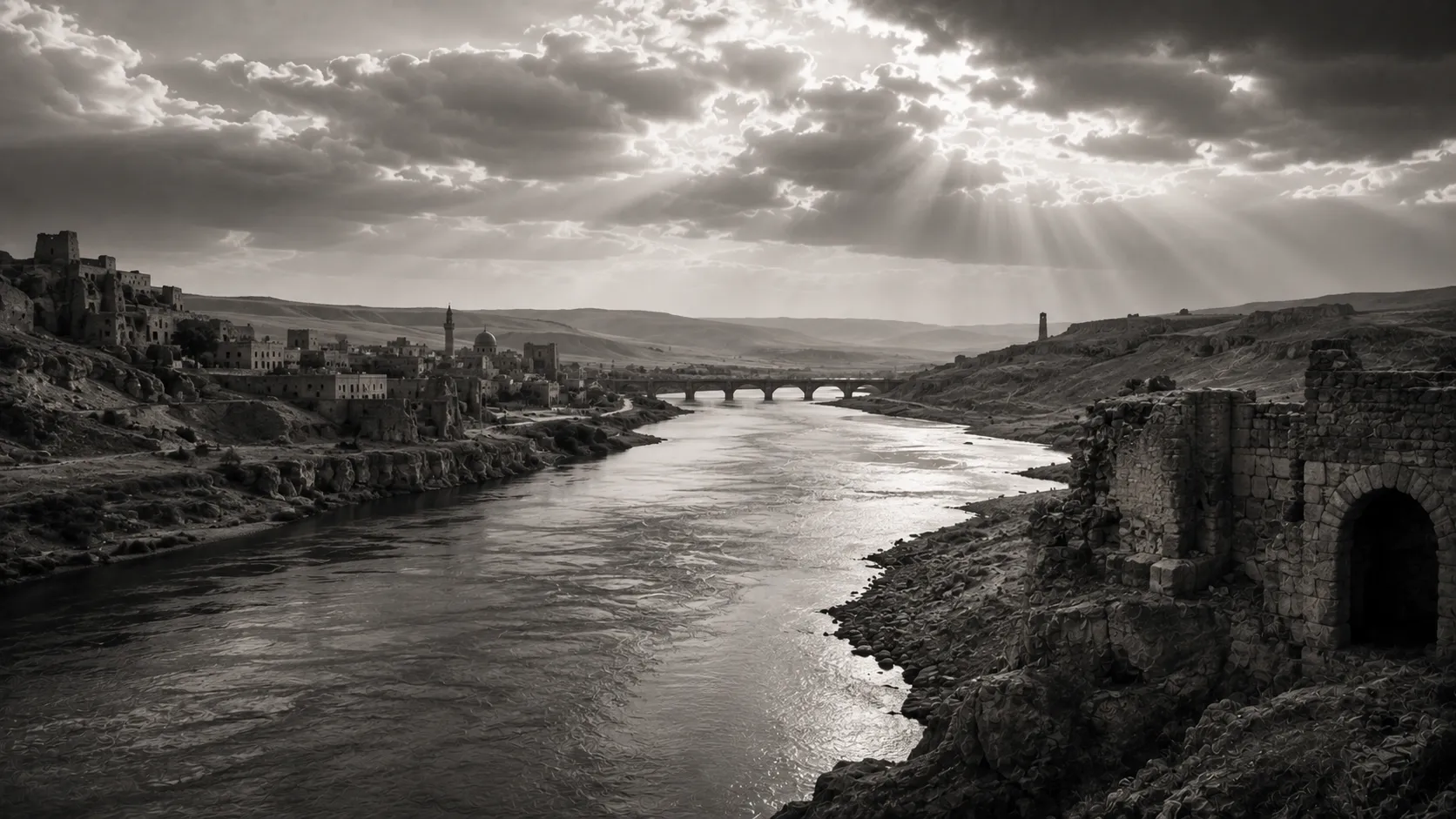
The Euphrates River is one of the most well-known rivers of all time.
It has fed civilisations for thousands of years, and flows through parts of modern-day Turkey, Syria and Iraq. From long before the foundation of the Roman Empire, the Euphrates was the site of great kingdoms, the travels of biblical characters and some of the most important events in Scripture.
But the Euphrates is more than a geographical landmark.
It's mentioned in the Bible many times, ranging from the Garden of Eden to the book of Revelation.
Due to its place in the prophetic scriptures, there is a lot of debate about:
* Why is the Euphrates River important in the Bible?
* What does Revelation say about the Euphrates?
Is the lack of rain on the Euphrates the end times?
Is Bible prophecy being fulfilled in the here and now?
To answer these questions we must take great care in the distinction between what the Bible clearly says and what is merely an interpretation.
The Euphrates in the Beginning
The Euphrates is first mentioned in the first few chapters of Genesis.
One of four rivers that ran from the area of the Garden of Eden.
Then came the fourth river, which is called Euphrates. (Genesis 2:14, KJV)
The Euphrates has been associated with God and His provision from the beginning of Scripture.
The exact location of Eden is still unclear, but the Euphrates is a river that has been meaningful ever since mankind's earliest history.
The boundaries of the Promised Land
Later God gave Abraham a promise that he would have a great land for his descendants.
One of its boundaries was the Euphrates River.
This land I will give unto thy seed, from the river of Egypt unto the great river Euphrates. (Genesis 15:18)
Here is a promise that connects to the Euphrates being a key geographical landmark in God's covenant with Abraham.
The river of the great empires.
Throughout the Old Testament era the Euphrates had been closely associated with some of the strongest kingdoms in the world.
Among them were:
* Assyria
* Babylon
* Persia
Through conquest, exile and restoration these empires have influenced Israel's history.
The Euphrates was thus linked not only with blessing, but also with God's judgment via foreign nations.
Babylon and the Euphrates
The ancient city of Babylon was situated on the river Euphrates.
It was dependent on the river for its walls, canals and prosperity.
Babylon came to be a symbol of human pride, rebellion, and worldly power.
One of the reasons the prophetic messages were often delivered against Babylon is its arrogance and resistance to God.
An understanding of this historical background is important at the time of reading the Book of Revelation, where "Babylon" is mentioned again symbolically.
The Euphrates in Revelation
There are two mentions of the river in the Book of Revelation.
Much discussion has been had about these passages by Bible students.
The Sixth Trumpet
John writes in Revelation 9: "Then I saw a third angel, who sounded his trumpet.
“The four angels who have the trumpets.
Four angels are let loose at God's time.
God's sovereignty is highlighted.
All of these things happen under His guidance and control.
The meaning of these symbols has been understood differently by the Christians.
These are interpreted literally by some.
Other people interpret them symbolically in the apocalyptic fashion of Revelation.
The Sixth Bowl Judgment
Later, Revelation mentions another major event.
The 6th angel poured out his vial on the great river Euphrates: and the water thereof was dried up (Revelation 16:12).
This, John says, is the way to make room for "the kings of the east.
This imagery is the same as what happened in the past when rivers were strategically important for military operations.
Many interpreters believe this passage to refer to a future event related to God's final judgements.
Others view it in terms of symbolism that expresses God's sovereign action that removes impediments in the progression of His purposes.
Has the Euphrates been dried up as per prophecy?
In recent years, parts of the Euphrates River have been reported to have low flows.
Some of the reasons have been:
* Extended drought.
* Climate conditions.
* Increased water usage.
Upstream dams and/or irrigation.
The result of these changes has been for some Christians to link these events to Revelation chapter 6.
But, there are precautions that must be taken.
It is not specified in the Bible that all times in history when the water receded in the river are to be considered the fulfillment of Revelation.
There are natural and man-made changes in many rivers.
It is not certain that current situations are a direct representation of what is happening in John's prophetic words.
Scripture does not give us the certainty to make dogmatic claims.
Who is the Euphrates in prophecy?
No matter the prophetic perspective, there are some truths.
The Euphrates represents:
* A historical boundary.
The emergence and decline of empires.
God's Dominion over nations.
God's prophetic plan is certain.
The river is a symbol throughout Scripture that kingdoms come and go but God's plan does not.
Lessons from the Euphrates
1. God is the One who rules history.
The empires, Assyria, Babylonia, Persia, Greece and Rome seemed invincible.
But all came to a bad end.
In the past, we are taught that the earthly kingdom is short-lived.
There is only one kingdom that never ends, God's kingdom.
2. Lead us in the Lord's grace to faithfulness, through Jesus our Lord.
God didn't give the Bible prophecy so that we could be curious.
It is designed to build up trust, inspiration, and a reminder of God's sovereignty in history.
3. Avoid Sensationalism
Each generation has seen events which have appeared to be fulfilled at the moment in accordance with prophecy.
Jesus Himself cautioned against speculation and date-setting.
Christians are not to live in fear, but with wisdom.
4. The Lord's promises never fail.
The Euphrates is mentioned in both tests of God and promises with Abraham and in His prophetic vision in Revelation.
Scripture tells us from Genesis to Revelation that one thing is true:
God is faithful to carry out His purposes.
5. Christ is the Centre of Prophecy.
The ultimate purpose of biblical prophecy is not a river, a nation or a political event.
It is Jesus Christ.
All the prophetic utterances lead to one thing—God's plan of redemption and the final coming of Christ's everlasting kingdom.
Common Misunderstandings
“Every change in the Euphrates brings about a change in Revelation.”
Not necessarily.
While the events that are present today might be important, Scripture does not tell us that every ebb and flow of the river is a literal fulfillment of Revelation 16.
"The Euphrates is only symbolic."
The Euphrates is the real genuine historical river.
There are some prophetic statements that may contain symbolic imagery that refers to the river but that does not detract from its historical reality.
Prophecy is supposed to foretell the news of newspapers.
Biblical prophecy is meant to reveal God's sovereignty, to bring people to repentance, to build up believers and to point people to Christ.
Frequently Asked Questions
Why is the Euphrates River important in the Bible?
In Genesis, it is one of the rivers that flowed beside Eden. It is recorded as a border of the promised land. It is mentioned throughout Israel's history, and in the prophetic visions of the book of Revelation.
Will the river Euphrates become dried up according to Revelation?
Yes. The Euphrates is mentioned in the sixth bowl judgment (Revelation 16:12). Christians have varying opinions on the literal and interpretational aspects of this prophecy as well as the timing.
Is the current and ongoing drying up of the Euphrates the fulfillment of what comes in the book of Revelation?
The Bible does not say that today is the time of the fulfillment of Revelation 16. Some believe that there may be some parallels, but others encourage prudence due to the lack of explicit time frame.
What is a Christian to learn from this prophecy?
Believers are urged to rejoice in the sovereignty of God, stay faithful, and be ready for the return of Christ rather than getting caught up in speculation.
Reflection
The Euphrates saw civilizations, fulfillment of God's promises, judgment on nations, and the playing out of biblical history.
It is found in Revelation, so we are reminded that history is headed toward God's predetermined end.
In the study of the ancient kingdoms as well as the modern ones, Christians should be reminded that Scripture always has a message for us that calls us to look past the news of the world to the rule of Jesus Christ.
The issue here is not just if prophecy is happening.
But the bigger question is, “Are our lives a life of faith, hope, and readiness as we await the return of our Lord?”
Closing Prayer
Heavenly Father,
Thank You for revealing Your faithfulness in the past. Teach me Your Word with humility, wisdom and discernment. Protect me from worry and doubt—fix my spirit on Jesus Christ. May I live each day faithfully, knowing that You are the Lord of all nations, all generations and all events in history.
In Jesus' name, Amen.